Trump Tariffs, Indo-US Trade Deal & Its Impact on India’s Real Estate Market (2026 Outlook)
How This Impacts India’s Real Estate Market

With tariffs on Indian exports earlier reaching punitive levels of nearly 50% before being reduced to around 18% under the new interim trade framework, the deal signals both opportunity and uncertainty for India’s economic growth.
Trade Policy Shift: From Conflict to Opportunity
The interim India-US agreement aims to expand bilateral trade, strengthen supply chains, and improve market access for industries such as textiles, chemicals, engineering goods, and technology.
Experts believe tariff reductions will enhance the competitiveness of Indian exports and boost investor confidence, with positive signals already seen in currency stability and capital markets.
However, economists also warn that increased imports from the US could widen India’s trade deficit and impact domestic manufacturing competitiveness if not balanced strategically.
How This Impacts India’s Real Estate Market
1. Growth in Commercial Real Estate
Improved export competitiveness may boost manufacturing, logistics, and IT sectors, leading to higher demand for:
Warehousing parks
Industrial corridors
Office space in cities like Gurugram, Noida, and Bengaluru
As global companies expand supply chains in India, commercial real estate absorption is expected to rise.
2. Rise in NRI & Institutional Investment
Stronger Indo-US trade ties often increase foreign investment confidence. Historically, trade cooperation correlates with rising FDI inflows — which directly supports premium housing and commercial assets in metro cities.
3. Residential Market Boost in Growth Corridors
Trade-led employment growth fuels housing demand in emerging urban hubs. Infrastructure-linked micro-markets such as Dwarka Expressway, New Gurugram, and Noida Expressway could witness faster price appreciation due to rising white-collar employment.
4. Construction Cost Volatility
If tariffs shift supply chains or commodity imports, prices of steel, chemicals, and construction equipment may fluctuate — impacting project costs and pricing strategies.
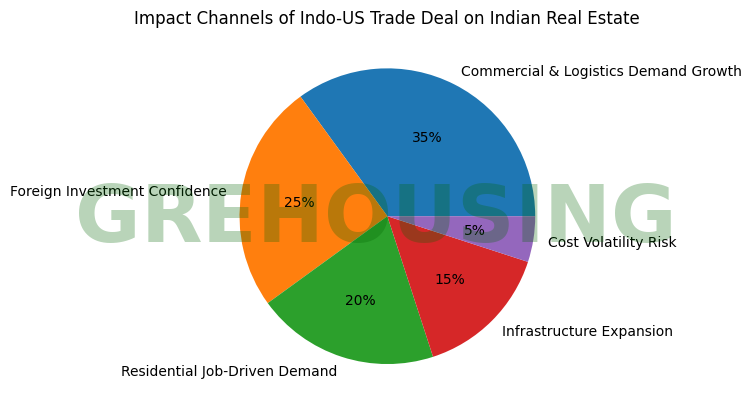
Impact Channels of Indo-US Trade Deal on Indian Real Estate
35% – Commercial & Logistics Demand Growth
25% – Foreign Investment Confidence
20% – Residential Job-Driven Demand
15% – Infrastructure Expansion
5% – Cost Volatility Risk
(Use this breakdown to create a pie chart infographic.)
Final Outlook: Strategic Opportunity for Property Investors
While Trump-era tariffs initially created uncertainty, the evolving Indo-US trade deal is increasingly seen as a long-term structural positive for India’s economy. Stronger exports, global supply chain shifts, and rising foreign investment could collectively drive the next real estate growth cycle — particularly in high-infrastructure corridors and business hubs.
For investors and homebuyers, this signals a clear takeaway: global trade policy is becoming a key driver of property value in India.